 Training
 Awareness Sessions
 IC Investigations TrainingAwareness SessionsIC Investigations
 25+
Counselors
60+
Workplaces
9
Locations
29500+
Lives changed








Human Resources
Incture Technologies
“The training was outstanding with the role plays and slide presentation. Mainly the skit enacted by us. Until and unless we feel that pain we will not come to know the situation that people experiencing sexual harassment are facing. This was a very good experience. This training should be attended by both men and women!”
Human Resources
Incture Technologies
“The training was outstanding with the role plays and slide presentation. Mainly the skit enacted by us. Until and unless we feel that pain we will not come to know the situation that people experiencing sexual harassment are facing. This was a very good experience. This training should be attended by both men and women!”
Human Resources
Incture Technologies
“The training was outstanding with the role plays and slide presentation. Mainly the skit enacted by us. Until and unless we feel that pain we will not come to know the situation that people experiencing sexual harassment are facing. This was a very good experience. This training should be attended by both men and women!”
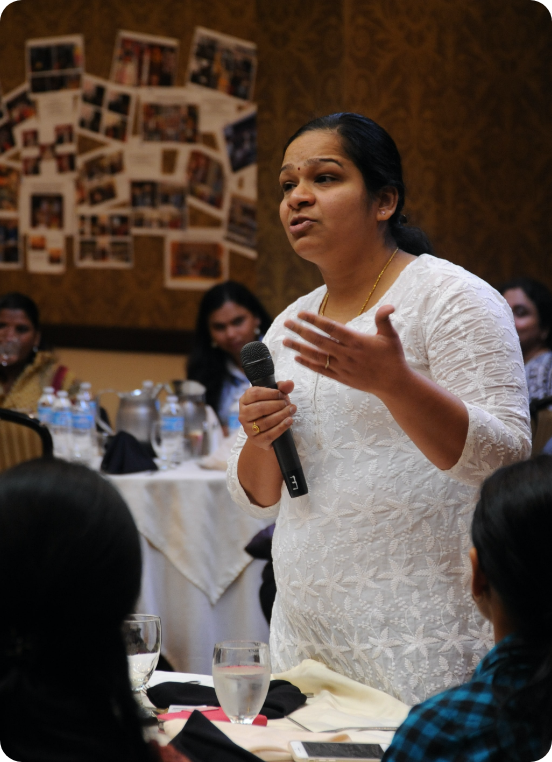
We are one of the leading providers of end to end POSH services in the Indian Industry, having served over 50 clients and trained thousands of employees, managers & committee members.
We provide all services related to anti sexual harassment like policy drafting, ICC setup, investigations, third party membership, trainings, and awareness programs.
Our team has qualifications in law, child rights, HR, counselling and psychology
We offer POSH services in Bangalore, Hyderabad, Chennai, Mumbai, Pune, Delhi, Noida, Gurgaon & Kolkata. (and travel to other locations PAN India)
We understand the sensitive nature of the issue and we employ a multi-disciplinary approach to deal with it.
Harassment can take many forms. It includes verbal acts like name-calling, posting of inappropriate images and graphics, written statements, or other actions that may be physically threatening, harmful, or humiliating. Harassment of students may come from other students or from school employees such as teachers, coaches, or other staff. To constitute sexual harassment, the conduct must be of a sexual or gender-based nature.
Bullying is a term used to describe certain forms of unacceptable behaviour in the workplace. It is an act of intimidating a “weaker person” to make them do something. It can be a repeated inappropriate behaviour, direct or indirect, whether verbal, physical or otherwise, conducted by one or more persons against another or others, at the place of work, in the campus, or during field visits, and/or in the course of employment which could reasonably be regarded as undermining the individual’s right to dignity.
The following are examples of the type of behaviour that may constitute bullying. The examples are illustrative but not exhaustive:
Sexual harassment includes any one or more of the following unwelcome acts or behaviour (whether directly or by implication) namely:
To provide protection against sexual harassment of women at workplace and for the prevention and redressal of complaints of sexual harassment and for the matters connected therewith of thereto.
The policy affects all employees who are:
The policy is designed for:
The Indian constitution guarantees for the rights of women at work places, with special emphasis on Article 14, 16, 19, 20 and 21.
The policy that you have must be in line with the Sexual Harassment of Women at Workplace (Prevention, Prohibition and Redressal) Act 2013. As best practice, it is vital to review your policies every year to evaluate the efficacy of the policy.
As an Institution head, you will need to send a strong message of the egalitarian work culture that your organization stands for, that celebrates diversity and a thriving work culture that is reflective of the company’s vision and mission. You will also need to ensure that you have a clear and robust anti-sexual harassment policy.
Here are some of the guidelines that will help you implement the companies anti sexual harassment policy:
Everyone has an equal right to work in a respectful environment. It is a human right. Often men can get harassed too. Harassing behaviour is unhealthy for everyone irrespective of the gender. A hostile work environment lowers the moral and productivity of the individual and interferes with the work your organisation is doing. Therefore, in order to help in creating a respectful work culture, you can incorporate a gender policy on anti-sexual harassment. The external member on the committee, one who has relevant experience in the issues of gender rights, justice and human rights will be able to help you evolve an organisational policy unique to your organisation’s ethos.
Ask for one. It is the collective responsibility of every person in the organisation to ask for the implementation of the anti sexual harassment policy. Inform the organisation of the legal consequences should there be no policy and redressal mechanisms in place.
It is mandated by law that any organization that has a minimum of 10 employees must constitute an Internal complaints committee (ICC). The ICC will have the powers of the civil court to act as Inquiry Authority on a complaint of sexual harassment, thus helping to create a safe work place. Going beyond the letter, the ICC will also ensure that victims and witnesses are not victimized or discriminated because of their complaint.
The committee members hold office for three years. Note that the external member will be paid fees.
The law states that the third party member must be ‘from amongst non-governmental organizations or associations committed to the cause of women or a person familiar with the issues relating to sexual harassment’. The third party member is one who is an expert on women’s issues, gender justice. By the virtue of his/her experience and expertise in the area of justice, social activism he/she brings into the ICC critical knowledge, ensuring that a fair and just voice prevails, guiding the other members in a fair adjudication of the case at hand.
The third party member provides:
Yes the third party member will be paid fees for their contribution to the committee and the organisation.
The committee must meet every month. It is one of the best practices to be followed by the organisation, regardless of whether or not there is a complaint. Regular meetings help the committee to design strategy, future plans of action and best methods of implementation of policy. Further, if committee members are familiar with each other, they can work in synergy when unique requirements come up.
It is important to meet once a month regardless of whether or not there is a complaint. The meetings help the committee to design strategies, future plans for training and sensitization programs, developing best practices and methods of implementation of the policy. Moreover, when the committee members meet regularly, it helps the committee group together thus enabling a work synergy.
A written complaint must be filed if a complaint investigation process is to be initiated. You need to write a formal complaint letter to the committee to help in the process of investigation. But a written complaint is not required to trigger mediation.
Documenting the harassment is not easy, and can bring up emotions that are unsettling. As difficult as it may be, this is a legal requirement that can give teeth to YOUR case.
Here are some tips to help you document the harassment:
You are in a leadership role in your organisation. It is your responsibility to challenge disrespectful behaviour when you witness it or are told about it.
You have a crucial role to play:
Even if you are not that person’s supervisor you still have the responsibility for stopping the harassment if observed or if you received a complaint, formally or informally. You open yourself to liability if you do not address the situation. You are responsible for receiving complaints, and following legal procedures to ensure the grievance is addressed.
One of the key blocks in creating a respectful workplace is to appreciate diversity. The foundation of equality, accepting of cultural differences, appreciating all types of diversity including diversity of thought will allow for a respectful workplace to stand, thus creating a workplace of mutual respect for all employees.
Implementing training programs is equally important to having a committee. We recommend:
As an organisation committed to a harassment free workplace, it is critical and important to set aside a separate budget for the multi-pronged activities of the committee. Organisations must plan and execute regular awareness and training programs for the committee members and all employees. Training on gender sensitization by experts on sexual harassment is essential as it is mandated by law.

Locations: Bangalore, Delhi, Mumbai, Hyderabad, Chennai, Pune, Kolkata, Coimbatore, Mangalore