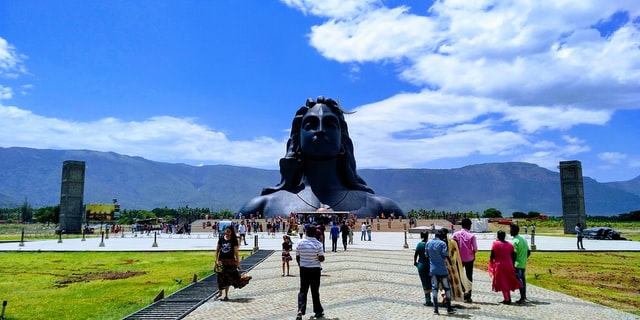
Bengaluru, the capital of Karnataka and popularly known as the Silicon Valley of India is home to a metropolitan population of 12 million. The city has combined its rich cultural heritage with modernization and urbanization. Bangalore is known as the ‘Garden City’ because of its greenery and the presence of several public parks. The pleasant climate of the city is one of its major highlights.

History:
The origin of the city can be traced back to the 16th century when Kempegowda, a feudal ruler, built a mud fort here. In the 18th century, it gained prominence as an important fort city under Hyder Ali and Tipu Sultan. In recent years the city has evolved into the second fastest growing metropolis in India.
People:
78.9 % of the population is Hindu, 13.9% is Muslim, 5.6 is Christian and 1% are Jains. Bangalore has a sizeable population of people who speak Tamil and Telugu. The city has a literacy rate of 89%. With a migrant population of more than 50% of its total population, the city is a melting pot of cultures.
Culture:
Bangalore celebrates Dasara, Holi, Ugadi, Karnataka Rajyotsava, Id, Diwali, Christmas, and other festivals. The city nourishes Hindustani and Carnatic musical traditions along with traditional dance forms. Bangalore is also a prime location for Rock and Metal music with several concerts and music festivals.
Economy:
Bangalore is one of India’s premium economic centers. It contributes over 87% to the economy of Karnataka. It has several public sector undertakings like Hindustan Aeronautics Limited, Bharat Electronics Limited, National Aerospace Laboratories, etc. The city is also the headquarters of various IT companies like Wipro and Infosys.
Mental health:
- According to the National Mental Health Survey conducted by the National Institute of Mental Health and Neuro Sciences (NIMHANS), 8 % of the population in Karnataka suffers from mental illnesses.
- The report also highlighted that 1 in 10 had a common mental health problem like depression, anxiety, or substance abuse disorder.
- There are only about 250 psychiatrists in Bangalore to support the mental health needs of its burgeoning population. That’s one psychiatrist for every 50,000 persons.
- The city-based mental health institutions have been at the forefront of raising mental awareness but there is still a lot to be done in the fast-growing city.
- As per the National Mental Health Survey 2015-16, conducted by the National Institute of Mental Health & Neurosciences (NIMHANS), Bengaluru, it was revealed that 9.8 million teenagers in the age group 13-17 years suffer depression and other mental health disorders and are “in need of active intervention”.
TalkItOver provides professional counseling services in Bangalore and in other major Indian cities.